
Digital shelf labels are electronic price displays that replace paper shelf tags and update prices wirelessly from a central system. Choosing the right digital shelf labels means matching four things to the store: display type, screen size, communication protocol and software openness. The buyer's guide below covers all four, plus real 2026 prices, adoption data, and the store types where digital shelf labels are not the right investment.
What Are Digital Shelf Labels?
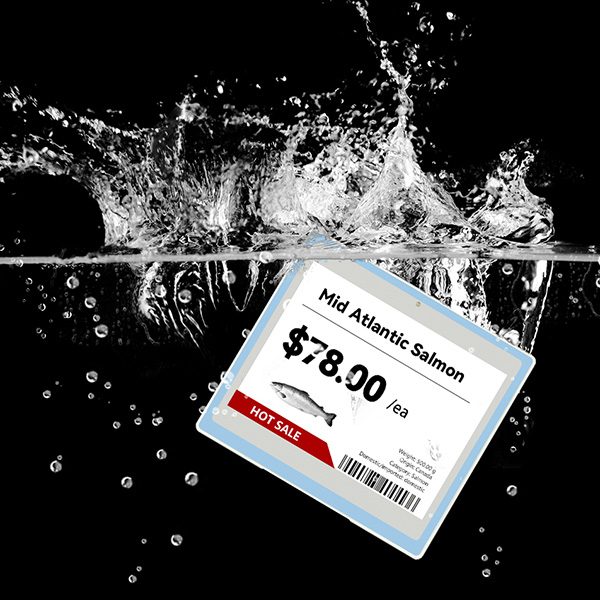
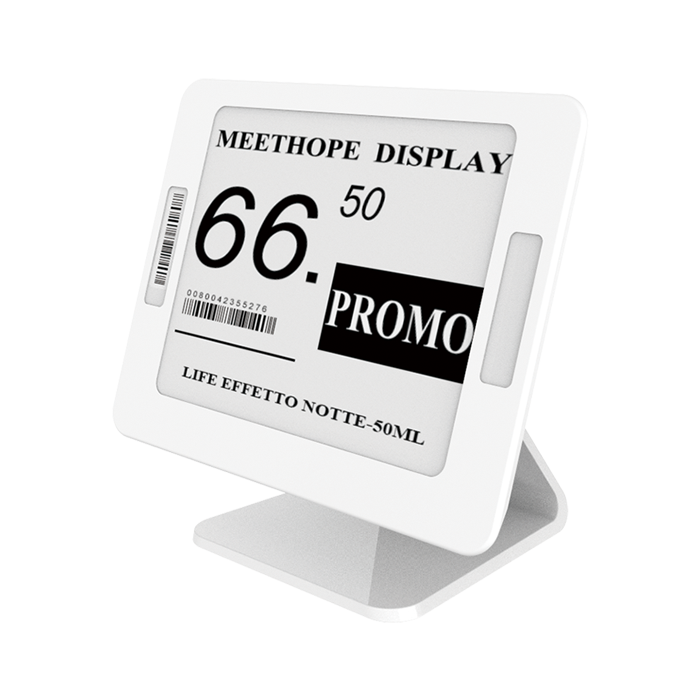
A digital shelf label is a battery-powered e-paper display mounted on the shelf edge, connected to store pricing software through a wireless gateway. The industry uses several names for the same hardware: electronic shelf labels (ESL), digital price tags, e-paper price labels and shelf-edge labels. Buyers will see all of these terms in supplier catalogs.
A complete system has three layers, and a quotation that covers only the first layer is incomplete:
Labels: the e-paper displays on the shelf, sized 1.54 to 13.3 inches. See the electronic shelf labels range.
Gateway: a ceiling-mounted access point that broadcasts price updates to the labels. One unit covers roughly 20,000 labels. See ESL gateway AP.
Software: the management platform that holds templates, schedules promotions and syncs with POS or ERP. See ESL management system.
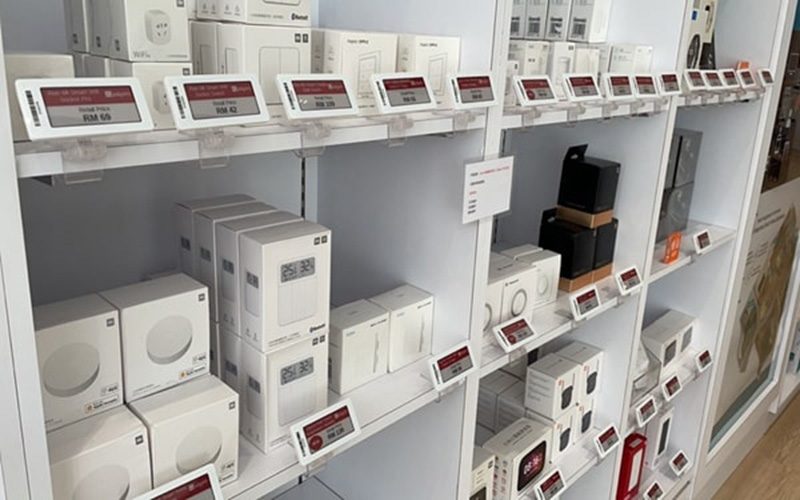
Photo: A complete label, gateway and software deployment in a supermarket. (AiEInkSmart customer project)
How Many Stores Actually Use Digital Shelf Labels?
Adoption crossed roughly 25% of retail businesses by 2022 and continues to climb, with the global market forecast to grow from US$1.85 billion in 2024 to US$7.54 billion by 2033. Walmart is the clearest signal in the U.S.: after piloting about 2,300 supercenters, the chain is extending shelf-edge automation across the national store base.
| Indicator | Figure | Source |
|---|---|---|
| Market size 2024 | US$1.85 billion | Grand View Research |
| Forecast 2033 | US$7.54 billion | Grand View Research |
| CAGR 2026-2033 | 17.4% | Grand View Research |
| Retail adoption by 2022 | ~25% of businesses | Technavio |
Source: Grand View Research; Walmart corporate news.
Which Digital Shelf Labels Display Type Should a Store Choose?
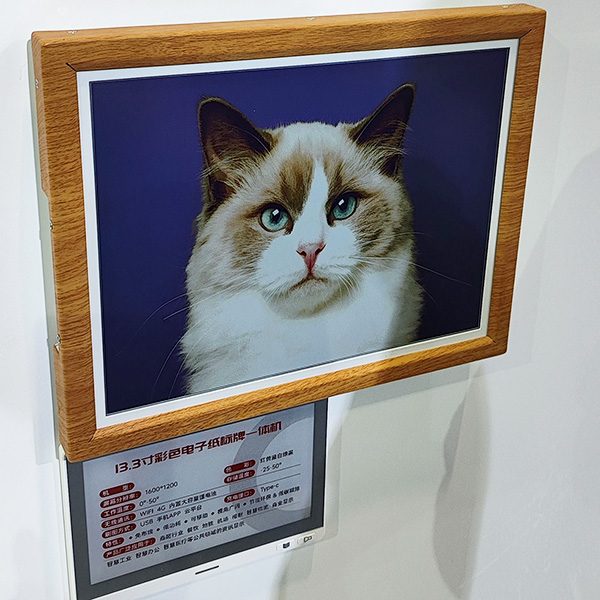
Black-and-white handles standard pricing, tri-color and four-color highlight promotions, and full-color Spectra 6 suits brand displays that change rarely. Refresh speed matters as much as color count: a black-and-white label redraws in about one second, while a full-color Spectra 6 label needs 25 to 40 seconds.
| Display Type | Refresh | 4.2" Price (2026) | Best Fit |
|---|---|---|---|
| Black & white | ~1 second | $5-$8 | Grocery, pharmacy, high SKU count |
| Tri-color (BWR) | ~1-2 seconds | $5-$8 | Weekly promotions |
| Four-color (BWRY) | ~2 seconds | $5-$8 | Multi-tier promotion rules |
| Full color (Spectra 6) | 25-40 seconds | $14-$18 | Cosmetics, electronics, brand walls |
Source: AiEInkSmart 2026 quotation data; E Ink ESL application page.
Cold aisles need digital shelf labels built to a separate specification. A low-temperature label rated to -25℃ belongs in freezer cabinets; a standard label placed there loses battery output fast. Apparel and fashion stores usually pick larger sizes with hanging accessories, because garment racks have no shelf rail to clip onto.
Which Communication Protocol Fits the Store?
2.4GHz suits most supermarkets, 433MHz penetrates large or obstructed floor plans, and NFC works for small shops with no gateway at all. Digital shelf labels run on a dedicated band, separate from the customer Wi-Fi network.
| Protocol | Range / Capacity | Typical Store |
|---|---|---|
| 2.4GHz | 20,000+ labels per gateway, seconds to update | Supermarkets, chains |
| 433MHz | Longer range, better penetration | Warehouses, big-box |
| Bluetooth (BLE) | Phone-based setup | Pilots, small formats |
| NFC | Tap to write, no gateway | Boutiques, single aisles |
Source: Wikipedia, Electronic shelf label; AiEInkSmart engineering documentation.
What Does a Complete System Cost in 2026?
Budget US$5-$20 per label, US$100-$300 per gateway, and a two-year payback for a mid-size store. A 5,000-SKU supermarket typically lands between US$35,000 and US$60,000 for hardware, depending on size mix and color choice.
| Line Item | 2026 Range | Notes |
|---|---|---|
| Labels 2.13"-2.9" | $5-$8 each | Highest volume sizes |
| Labels 4.2"-7.5" | $8-$20 each | End-caps, electronics |
| Full color 4.2" | $14-$18 each | Premium displays only |
| Gateway | $100-$300 each | One per ~20,000 labels |
| Accessories | $0.1-$1 per position | Rails, clips, stands, hangers |
Source: AiEInkSmart 2026 quotation data.
Two digital shelf labels cost items get missed in first-round budgets: mounting accessories across every shelf position, and integration labour if the POS system has no ready connector. Ask suppliers to quote all three layers plus accessories. Start with an ESL demo kit before committing to a full rollout, or request a current price list on the contact page.
When Are Digital Shelf Labels the Wrong Choice?
Digital shelf labels do not pay back in every store: very small shops, stores with stable prices, and unstructured display formats often do better with paper. An honest supplier says so before quoting, and the boundary matters because a failed rollout costs more than the labels.
Under ~300 SKUs with rare price changes. Manual re-tagging takes minutes per week, so the labour saving never covers the hardware.
Market stalls, bulk bins and produce sold loose. No fixed shelf edge means no reliable mounting point.
Stores with no POS database. A digital shelf label system reflects a price file; without a clean source of prices, automation only spreads existing errors faster.
Very short-term pop-up retail. A payback measured in years does not fit a three-month lease.
Stores in those situations can still start narrow: label one high-churn category, keep paper elsewhere, and expand when the price-change workload justifies it.
How to Evaluate a Digital Shelf Label Supplier
Five checks separate a serious supplier from a reseller: factory ownership, open API documentation, battery test data, accessory range and deployment record. Asking for documentation before buying digital shelf labels is the fastest filter, because closed systems lock a store into one vendor for every future price integration.
Ask who makes the hardware. AiEInkSmart, the ESL brand of PanPanTech, runs an ISO 9001 plant in Guangzhou with SMT lines and automated module testing.
Ask for MQTT and REST API docs up front. Suppliers who share integration manuals before an order are the ones an integrator can build on.
Ask for the battery test report, not a marketing figure. AiEInkSmart rates up to 7 years at standard update frequency.
Ask about accessories. Rails, clips, stands, hangers and peg-hook supports decide installation speed. See ESL price tag accessories.
Ask for the deployment record. PanPanTech systems run in 6,000+ stores across 30+ countries.
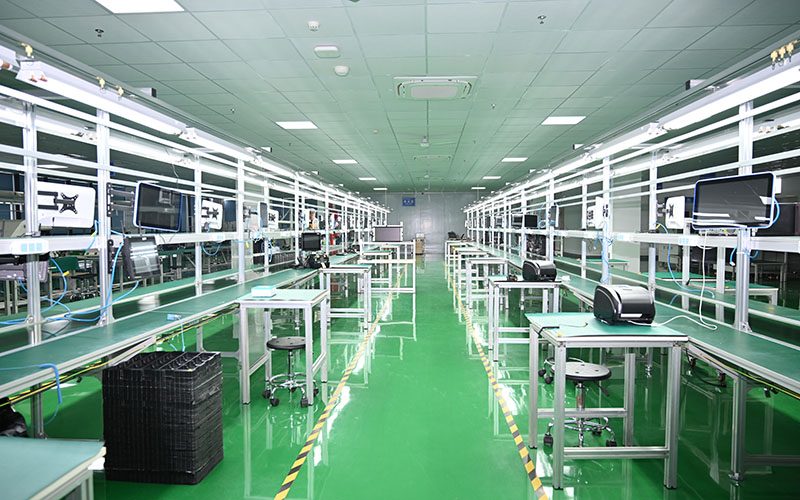
Photo: SMT line and automated module testing at the AiEInkSmart factory, Guangzhou.
FAQ About Digital Shelf Labels
Do digital shelf labels mean stores will raise prices during the day?
The hardware makes price changes faster, but pricing policy stays a retailer decision, not a hardware feature. Major chains deploying shelf-edge automation have publicly stated the goal is accuracy and labour savings rather than intraday surge pricing. Retailers who want to reassure shoppers can publish a pricing policy and cap the number of scheduled changes in the software.
Are digital shelf labels suitable for every retail environment?
No. Grocery, pharmacy, electronics, apparel, convenience and warehouse formats all deploy them successfully, but very small shops, loose-goods formats and stores without a POS price file usually see no payback. The section above lists the boundary cases.
How do clothing retailers use digital shelf labels?
Fashion retailers hang larger digital shelf labels on garment racks to show size, fabric and price, then run end-of-season markdowns across a whole category in one operation instead of re-ticketing every item by hand.
How long does a rollout take?
A single supermarket usually installs in two to five days: gateway mounting first, then labels bound to SKUs with a handheld scanner, then a full price sync. Integration with the POS system is the step to schedule earliest.
What happens during a network or power outage?
Digital shelf labels keep displaying the last received price because e-paper holds an image without power. Updates resume automatically once the gateway is back online.
Can a store mix label sizes and colors in one system?
Yes. One gateway and one software platform manage mixed sizes and color types together, which lets a store put small black-and-white labels on grocery shelves and larger color labels on promotional end-caps.
About the author: Panda Wang is co-founder of PanPanTech (AiEInkSmart), an electronic shelf label manufacturer serving 6,000+ stores in 30+ countries. Published July 2026.
